

Introduction and System Architecture
Rapid urbanization and the rise in vertical architecture have made managing human circulation, ensuring security, and reducing operational costs the top priorities for building managements. While traditional elevator systems allow users to enter the cabin and travel freely by pressing any floor button they wish, modern security and building management strategies consider this uncontrolled access a serious vulnerability. At this point, elevator authorization systems come into play as advanced access control solutions implemented to monitor, control, and restrict elevator usage based on specific rules. The system is designed to prevent unauthorized or unrelated individuals from accessing private floors, R&D centers, management departments, or personalized residential floors.
The core architecture of the system relies on the harmonious integration of hardware control units and software management layers. A card reader, biometric terminal, or face recognition unit integrated inside the elevator cabin is responsible for verifying user credentials. An electrical connection is established between the reader device in the cabin and the elevator floor routing panel (controller) placed in the elevator control panel. The controller processes the incoming authentication data and activates only the buttons of the floors for which the user is authorized.
Operating Principles and Technical Hardware Parameters
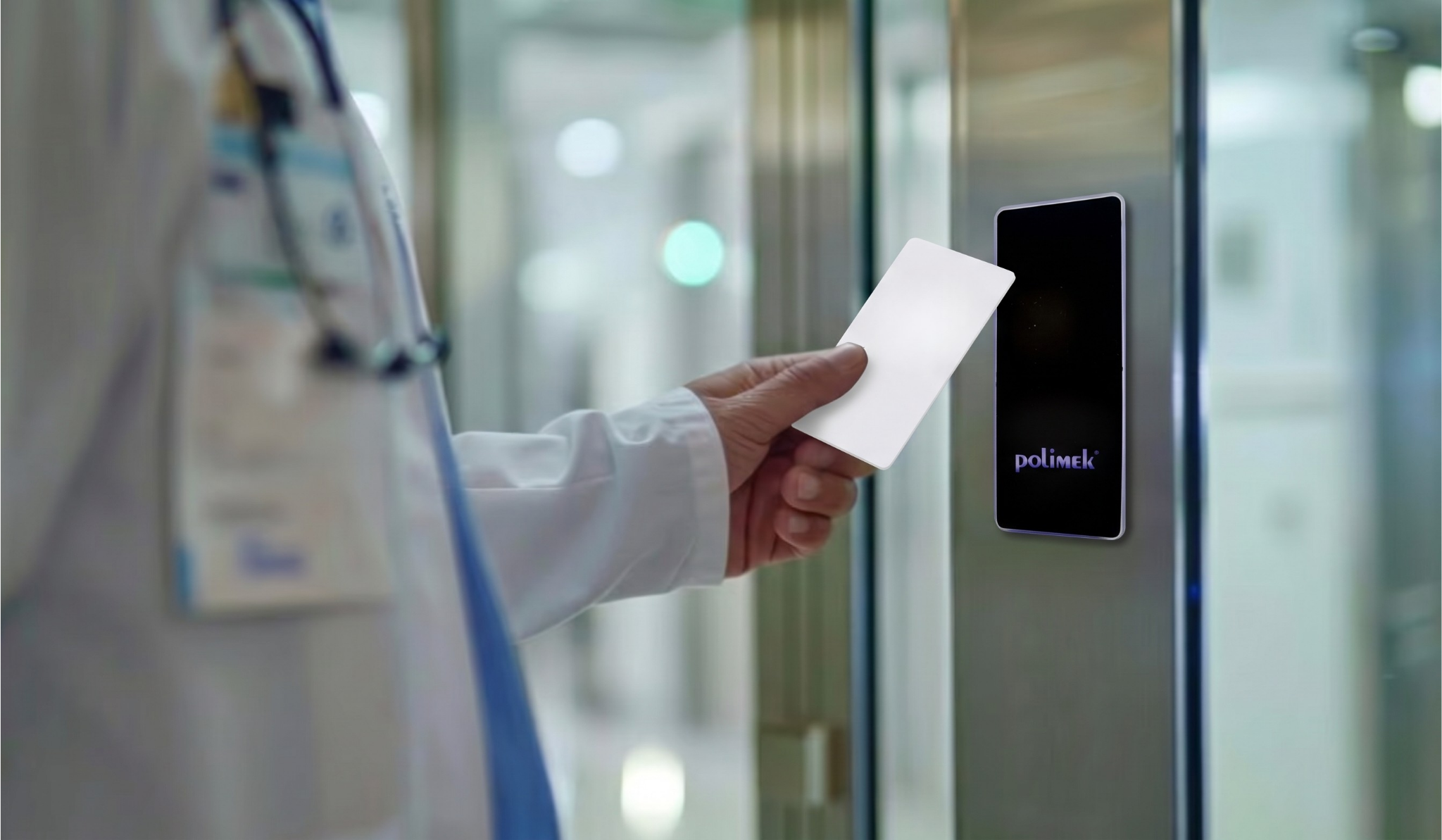
The working mechanism of elevator authorization systems is based on electrically bypassing the in-cabin keypad (button panel) or the calling buttons on the floors. When a user enters the elevator, they cannot directly press the button of the floor they want to go to, because the relevant floor buttons are in a passive state. When the user scans their pre-defined RFID card or performs biometric verification (fingerprint, face recognition), the reader inside the cabin transmits this data to the elevator control board. The control board queries the user’s authorization profile in the database and triggers the relays belonging to the permitted floors. The authorized floor buttons light up and become active, and the elevator moves only towards these selected floors.
High electrical noise occurring in motion within elevator shafts (elevator hoistways) can negatively affect data transmission quality. To prevent this situation, in industrial designs, signal quality is preserved by using converters between the in-cabin card readers and the control panels. Control modules and validation terminals can be applied in different mounting scenarios depending on the structure of the project and are designed to work integrated with the existing elevator control system. The hardware used in professional elevator authorization systems is developed in accordance with industrial design criteria capable of operating under different environmental conditions.
Software Infrastructure and Polimek Integrated Solutions
Elevator authorization systems offer two different architectural approaches based on their operating models: offline and online. In offline operating systems, card definitions and authorization scenarios are made through a desktop software installed on the computer and written onto the cards. The system operates without being in continuous communication with the server; access logs are pulled from the device to the computer when needed. In online systems, the validation units in the elevator cabin connect to the central server in real-time. The moment the user scans their card, the authorization verification is queried from the database instantly; this allows for immediate remote card cancellation, authorization updates, and real-time access tracking.
Sectoral Application Areas and Usage Scenarios
Elevator authorization systems are designed to adapt to highly flexible sectoral scenarios depending on the intended use of the buildings. The areas where these systems are most frequently used and the operational advantages they provide are as follows:
Residences and Housing Estates
In residential projects, elevator authorization is an indispensable element to protect the privacy of flat owners and ensure general building security. Residents can reach only their own floors and social facilities by scanning their cards or mobile applications. The management of temporary visitors such as couriers, guests, and technical service personnel is provided through SMS-based temporary QR codes. By introducing the QR code sent to the visitor’s phone by security or directly by the resident to the reader inside the elevator, the visitor can only go up to the floor of the permitted flat; their access to other floors is electrically blocked.
Plazas, Business Centers, and Public Buildings
In multi-partner business centers or public institutions (municipalities, courthouses, etc.), uncontrolled transitions of institutions operating on different floors into each other’s areas are prevented. Executive floors, archive rooms, financial departments, and floors where server rooms are located are defined as high-security areas. This maximizes corporate data security and physical protection.
Hospitals and Healthcare Complexes
In hospitals, hygiene, patient privacy, and operational speed are of critical importance. Direct access by elevator to restricted areas such as operating rooms, intensive care units, sterile laboratories, and neonatal units is kept under control through authorization systems. Only authorized medical personnel can reach these critical floors via card or face recognition systems.
Critical Security, Earthquake, and Fire Alarm Integrations
In modern buildings, elevator authorization systems must operate not as an independent security element, but in an integrated structure with the building’s general fire detection, seismic monitoring, and Building Management Systems (BMS). The technical and legal details of these integrations are of vital importance for life safety:
Fire Detection and Evacuation Integration
The behavior scenarios of elevators are predefined when an emergency signal is received from the fire detection and alarm system in the building. An emergency signal is sent to the elevator authorization system via the fire alarm panel. Many professional elevator authorization systems support fire alarm integration. The scenario to be applied after the signal from the fire alarm system is determined depending on the elevator control system used, building regulations, and project requirements. Emergency behaviors must be projected in harmony with the safety scenarios of the elevator manufacturer.
Seismic Detection and Earthquake Integration
In some projects, elevator systems can be integrated with seismic monitoring systems used within the building. These integrations are evaluated on a project basis and may vary according to the elevator control system used and local legislation. When the tremor threshold is exceeded, the seismic sensor sends a dry contact relay signal to the elevator control board. In order to prevent the collision of the cabin with the counterweight, the elevator reduces its speed to a safe level, docks at the nearest floor, opens its doors, and deactivates after completing the evacuation of the passengers. After the earthquake wave passes, the system remains locked until it is manually reset to prevent unauthorized and uncontrolled restarting.
Building Management System (BMS) Integration
In smart buildings, elevator systems are integrated into Building Management System (BMS) platforms through open communication. Depending on the project, elevator access control systems can be integrated with building management systems and other security platforms. The functions that can be provided may vary according to the infrastructure used. Thanks to these integrations, access data can be managed on central platforms and common scenarios can be created with different building automation systems.
Energy Efficiency and Corporate Communication Infrastructure
One of the greatest indirect benefits that elevator authorization systems provide to buildings is the high rate of savings achieved in electrical energy consumption. Unnecessary calling of elevators, a single passenger calling multiple elevators at the same time, or the arbitrary use of elevators by unauthorized persons creates a serious energy cost and mechanical wear. Thanks to the break time and time zone planning made on the floor authorization panels, access to the unused floors of the building is kept open only during designated active hours; the elevator is prevented from going to those floors at other hours, thereby preventing unnecessary start-stop movements. This control mechanism both supports green building criteria by reducing electricity consumption and extends the lifespan of elevator mechanical components (rope, motor, brake, etc.), thus lowering maintenance costs.
International Standards and Regulatory Compliance
International safety standards must be taken into account in the design and integration of professional elevator authorization systems. In particular, EN 81-20, EN 81-50, EN 81-72, and EN 81-73 standards offer important references regarding elevator safety and emergency scenarios. In access control systems, EN 50133 standards and the ISO 27001 approach in terms of information security are widely applied in modern projects. Systems designed in accordance with these standards both increase user safety and contribute to long-term operational sustainability.
Conclusion
Elevator authorization systems have gone beyond being just a security application that limits floor access in modern buildings; they have become an integral part of physical security, user privacy, energy efficiency, and building automation strategies. Supported by RFID cards, biometric authentication systems, QR code technologies, and mobile access solutions, these systems allow the mobility within the building to be managed in a controlled and recordable manner by creating special access scenarios for different user groups.
Thanks to integrations carried out with fire detection systems, seismic monitoring solutions, and Building Management Systems (BMS), elevators cease to be merely a means of transportation and become an active component of emergency management, operational efficiency, and smart building infrastructure. Especially in high-rise structures, multi-tenant plazas, hospitals, residential projects, and facilities requiring critical security, the level of control provided by these systems offers significant advantages both for user safety and operational continuity.
References
- International Organization for Standardization. (2015). ISO 9001:2015 Quality Management Systems – Requirements. Geneva, Switzerland.
- International Organization for Standardization. (2022). ISO 27001:2022 Information Security, Cybersecurity and Privacy Protection – Information Security Management Systems Requirements. Geneva, Switzerland.
- European Committee for Standardization. (2020). EN 81-20:2020 Safety Rules for the Construction and Installation of Lifts – Lifts for the Transport of Persons and Goods – Passenger and Goods Passenger Lifts.
- European Committee for Standardization. (2020). EN 81-50:2020 Safety Rules for the Construction and Installation of Lifts – Examinations and Tests.
- European Committee for Standardization. (2015). EN 81-72:2015 Firefighters Lifts.
- European Committee for Standardization. (2016). EN 81-73:2016 Behaviour of Lifts in the Event of Fire.
- European Committee for Electrotechnical Standardization. (1997). EN 50133 Series: Alarm Systems – Access Control Systems for Use in Security Applications.
- National Fire Protection Association. (2024). NFPA 72: National Fire Alarm and Signaling Code. Quincy, Massachusetts, USA.
- National Fire Protection Association. (2024). NFPA 101: Life Safety Code. Quincy, Massachusetts, USA.
- American Society of Mechanical Engineers. (2022). ASME A17.1/CSA B44 Safety Code for Elevators and Escalators.
- Building Owners and Managers Association International. (2023). Office Building Security and Access Control Best Practices.
- The Chartered Institution of Building Services Engineers. (2021). Guide D: Transportation Systems in Buildings. London, UK.
- Barney, G. C., & dos Santos, S. M. (2015). Elevator Traffic Handbook: Theory and Practice. Routledge, London.
- Strakosch, G. R., & Caporale, R. S. (2010). The Vertical Transportation Handbook (4th Edition). Wiley Publishing.
- So, A. T. P., & Chan, W. L. (2016). Intelligent Building Systems. Springer International Publishing.
- Sinopoli, S. (2021). Smart Building Systems for Architects, Owners and Builders (2nd Edition). Butterworth-Heinemann.
- Garcia, M. L. (2008). The Design and Evaluation of Physical Protection Systems (2nd Edition). Butterworth-Heinemann.
- Smith, C. L., & Brooks, D. J. (2013). Security Science: The Theory and Practice of Security. Butterworth-Heinemann.
- Honeywell Building Technologies. (2023). Integrated Building Management Systems Technical Guide.
- Schindler Group. (2023). Destination Control and Access Control Integration White Paper.
- KONE Corporation. (2024). Access Control Solutions for Smart Buildings.
- Otis Worldwide Corporation. (2023). Elevator Security and Building Access Management Systems.
- TK Elevator. (2023). Elevator Access Control Integration Guide.
- U.S. Green Building Council. (2024). LEED v4.1 Building Operations and Maintenance Reference Guide.
- Türkiye Cumhuriyeti Sanayi ve Teknoloji Bakanlığı. (2023). Asansör Yönetmeliği (2014/33/AB), Resmî Gazete.