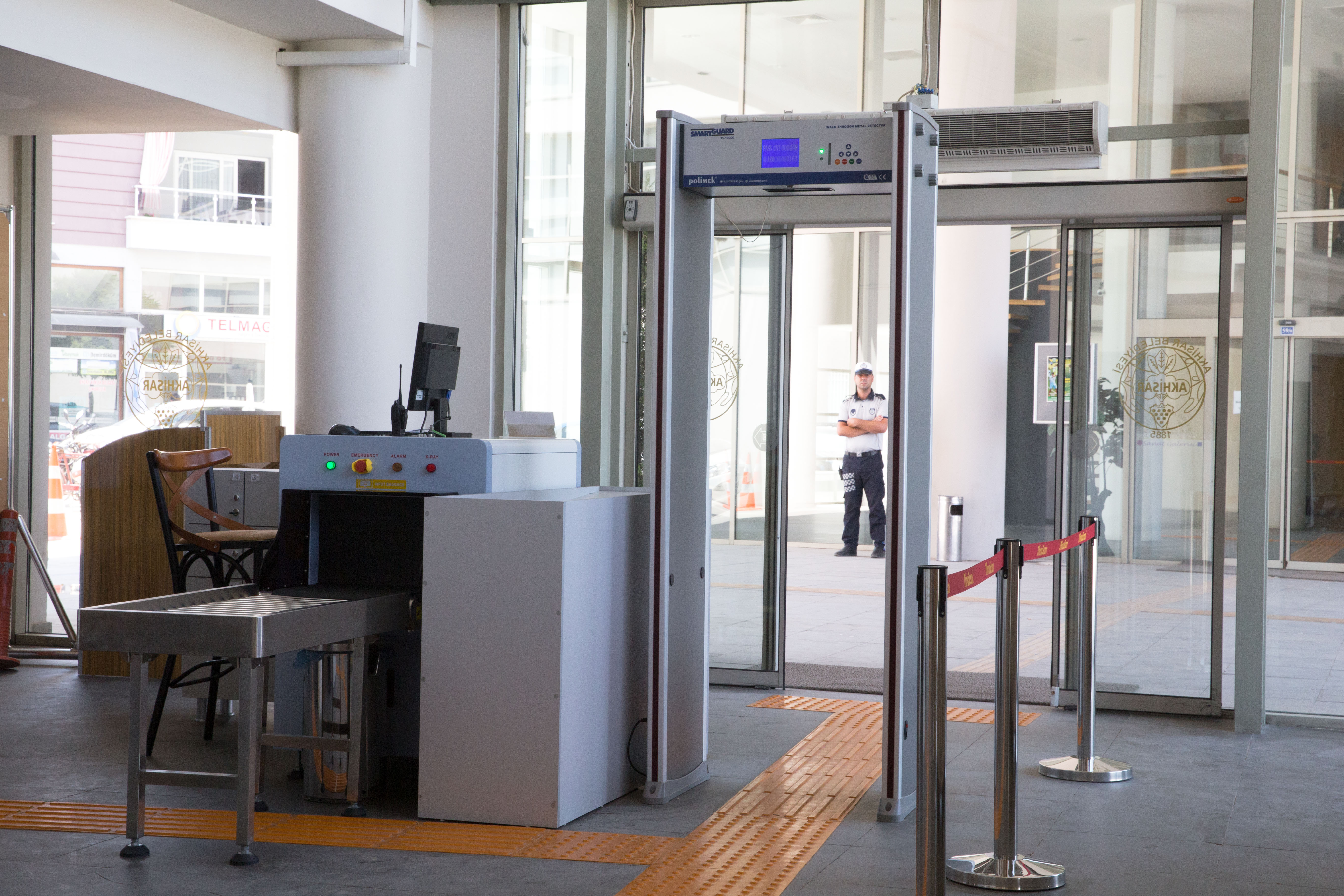



The global construction industry is considered one of the sectors most vulnerable to security risks due to its high capital intensity, complex logistics operations, and extensive human mobility. Equipment theft, unauthorized access, sabotage attempts, and occupational safety violations occurring on construction sites lead to significant losses in terms of project cost, schedule, and operational efficiency. This study examines the effects of modern security Technologies particularly X-ray baggage scanning systems and walk-through metal detectors on security management in construction environments. The findings demonstrate that physical security infrastructures are not limited to theft prevention alone; they also play a critical role in enforcing occupational health and safety standards, strengthening operational control mechanisms, and supporting sustainable project management. The evaluations indicate that integrated security solutions enhance risk management in construction projects, reduce financial losses, and improve worker safety.
- The General Importance of Security Systems in the Construction Industry
Construction sites are inherently high-risk working environments due to their constantly changing physical structures, open-area operations, and intensive human traffic. In large-scale projects especially, the involvement of multiple subcontractors, temporary workers, and suppliers makes security management increasingly complex. This situation creates substantial risks not only in terms of physical security, but also regarding operational continuity and occupational health and safety.
Industry studies indicate that a significant proportion of construction companies experience at least one case of theft or vandalism during project execution. Stolen equipment, missing materials, and sabotage-related damages cause not only direct financial losses, but also project delays, increased insurance costs, and reduced workforce productivity. Copper cables, generators, heavy equipment components, and technical devices are among the most frequently targeted assets on construction sites (Berg & Hinze, 2005).
Modern security systems provide a multilayered protection approach to mitigate these risks. Surveillance systems, access control solutions, biometric verification technologies, turnstiles, X-ray scanning devices, and metal detectors can collectively establish a more effective security network. Furthermore, security technologies contribute not only to protection against external threats, but also to controlling internal risks such as employee theft, unauthorized equipment use, and occupational safety violations.
Effective security management also supports the implementation of occupational health and safety standards. Preventing unauthorized access to hazardous areas, monitoring workforce movement, and inspecting dangerous materials contribute to reducing workplace accidents. Consequently, modern security technologies are now regarded not only as protective tools, but also as essential components of sustainable project management (Hossain et al., 2023).
- The Role of X-Ray Scanning Systems in Construction Logistics and Risk Management
Effective monitoring of material inflows and outflows is one of the fundamental components of logistics security in construction projects. In large-scale projects, hundreds of equipment units, vehicles, and materials move daily, making security vulnerabilities increasingly inevitable within such intensive traffic. Traditional manual inspection methods may become insufficient under high operational pressure, thereby increasing security risks.
X-ray scanning systems enable faster and more reliable inspection processes through non-intrusive control technologies. In particular, dual-energy X-ray technology analyzes the atomic density of scanned objects, allowing organic, inorganic, and metallic materials to be distinguished from one another. As a result, weapons, sharp objects, explosive materials, or stolen equipment can be detected within a short time frame (Trident, 2015).
Modern X-ray baggage scanning systems are utilized not only to identify security threats, but also to optimize logistics flow control within construction sites. Monitoring the movement of high-value equipment is especially critical for protecting project assets. These systems also enhance supply chain security by preventing unauthorized or non-compliant products from entering the site.
Advanced X-ray solutions used in critical infrastructure projects provide more precise analyses through high-resolution imaging technologies. Features such as automatic threat detection, image magnification, density analysis, and color-based material discrimination accelerate operator decision-making processes. These technologies reduce human error in security procedures and establish more reliable inspection mechanisms (LINEV Systems, 2024).
- The Effectiveness of Metal Detectors in Preventing Theft and Hazardous Materials
Walk-through metal detectors are among the most widely used security technologies for ensuring physical security on construction sites. Installed at site entry points, walk-through metal detectors allow rapid screening of personnel and visitors without disrupting operational workflows.
Modern walk-through metal detectors can precisely identify the location of metallic objects on the human body through multi-zone detection technologies. Advanced models contain between 6 and 45 independent detection zones, enabling more accurate threat analysis. Particularly on large construction sites with heavy personnel traffic, these systems enhance security levels while maintaining operational efficiency through high throughput capacity (Paulter, 2019).
Handheld metal detectors also play an important role in secondary security inspections. These devices provide operational flexibility for security teams during narrow-area scans, vehicle inspections, or detailed personnel checks. Moreover, the visible use of such systems creates a strong deterrent effect against potential theft attempts.
The theft of copper cables, technical equipment, and metal structural components is a common issue on construction sites. Metal detectors help prevent the unauthorized removal of such assets from project areas, thereby reducing financial losses for companies. Additionally, by enabling the inspection of sharp and hazardous tools, these systems provide an extra layer of protection for worker safety (Safeagle, 2021; ZOAN Group, 2023).
- Polimek’s Security Technologies in Construction
Among the domestic manufacturers operating in the field of construction security, Polimel develops integrated solutions in physical security and access control technologies. The company’s X-ray baggage scanning systems, metal detectors, turnstile systems, and workforce monitoring solutions are widely utilized in projects requiring high levels of security.
Polimek’s X-ray baggage scanning systems stand out with their high-resolution imaging capabilities and long-term uninterrupted operational performance. Advanced image-processing technologies assist operators in detecting suspicious objects more rapidly. In addition, the network-enabled architecture of these systems facilitates centralized security management.
The company’s multi-zone walk-through metal detectors are capable of analyzing the location of metallic threats in detail through high-sensitivity detection technologies. These systems can operate in integration with full-height turnstiles and workforce attendance management software, enabling centralized control of site entry and exit operations.
One of the most significant advantages of integrated security solutions is the ability to manage physical security and administrative processes through a single platform. Consequently, not only are security threats minimized, but personnel tracking, visitor management, and operational reporting processes are also optimized. The availability of local technical support and manufacturing infrastructure further contributes to the sustainability of these systems (Polimek, 2024).
Due to increasing project scales and complex operational processes, the construction industry requires advanced security technologies more than ever before. Traditional security methods are often insufficient for managing the risks emerging in modern construction environments. Therefore, the implementation of technologies such as X-ray baggage scanner systems, metal detectors, and access control solutions has become a strategic necessity in contemporary construction projects.
The evaluations conducted in this study demonstrate that security technologies are not limited to preventing theft and unauthorized access; they also make critical contributions to operational efficiency, worker safety, and the implementation of occupational health standards. Particularly in high-risk projects, the use of integrated security systems provides significant advantages in reducing financial losses and maintaining project continuity.
In the future, artificial intelligence-supported analysis systems, smart scanning technologies, and centralized data management infrastructures are expected to become increasingly widespread in construction security. This transformation will make security processes more proactive, rapid, and efficient, while also supporting the industry’s sustainability and digitalization objectives.
References
Ablordeppey, E. E. (2020). Security management practices on construction sites and their impact on project performance. Construction Research Journal, 12(3), 45–58.
Berg, R., & Hinze, J. (2005). Theft and vandalism on construction sites. Journal of Construction Engineering and Management, 131(7), 826–833. https://doi.org/10.1061/(ASCE)0733-9364(2005)131:7(826)
Federal Bureau of Investigation. (2022). Property crime statistics and construction site security trends. U.S. Department of Justice. https://www.fbi.gov
Hossain, M. A., Rahman, M. S., & Karim, R. (2023). Effectiveness of security measures in preventing construction site theft. Safety Science, 158, 105954. https://doi.org/10.1016/j.ssci.2022.105954
LINEV Systems. (2024). X-ray baggage and cargo screening technology overview. LINEV Systems Technical Publications. https://www.linevsystems.com
Navaratnam, S., Perera, B., & Fonseka, M. (2022). Financial impact of vandalism and theft in construction projects. Journal of Construction Engineering and Management, 148(6), 04022045. https://doi.org/10.1061/(ASCE)CO.1943-7862.0002298
Paulter, N. G. (2019). New standards for improving metal detector testing and evaluation. National Institute of Standards and Technology (NIST). https://www.nist.gov
Polimek Elektronik. (2024). SG-L 6040 B X-ray baggage scanner and integrated access control solutions: Technical specifications. Polimek Elektronik A.Ş.
Pye-Barker Fire & Safety. (2024). The role of security systems in OSHA and facility safety compliance. https://www.pyebarkerfs.com
Safeagle. (2021). Walk-through metal detector vs. hand-held metal detector: Security efficiency analysis. https://www.safeagle.com
SafetyCulture. (2024). Construction site access control and operational efficiency. https://safetyculture.com
Simukonda, N., & Kamwela, A. (2021). Security management practices in large-scale construction projects. Journal of Construction Project Management, 9(2), 88–102.
Trident. (2015). Dual-energy X-ray inspection systems for critical infrastructure protection. Trident Technical Report Series.
ZOAN Group. (2023). The enduring role of handheld metal detectors in frontline security operations. https://www.zoangroup.com
Zohourian, M., Pamidimukkala, A., & Kermanshachi, S. (2026). Artificial intelligence in the construction industry: A comprehensive review of benefits and challenges. Journal of Legal Affairs and Dispute Resolution in Engineering and Construction, 18(1), 03125001. https://doi.org/10.1061/JLADAH.LADR-1234